

Brief Analysis of Smart Grid Application - Distribution Automation and Management System
In order to continuously optimize business processes, realize information integration, and improve the production management capabilities of power stations, GIFA’s Smart Grid Project Team provides end-to-end hardware and full-life-cycle digital I&C system solutions to create collaborative, refined, and intelligent solutions. The intelligent operation and management mode of the power grid will ultimately improve the production efficiency and market competitiveness of the power grid management system.
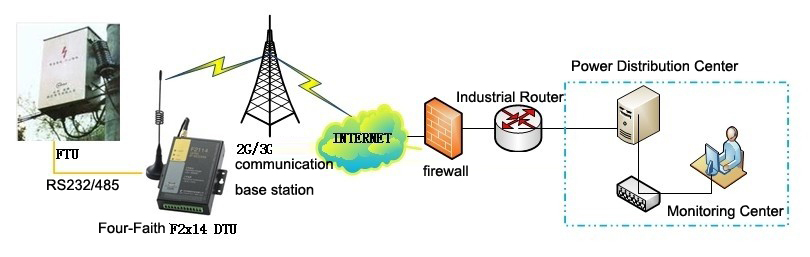
Distribution network operation automation functions include:
(1) Data collection and monitoring. Data acquisition and monitoring, also known as SCADA, is the deepening and expansion of the "four remotes" (telemetry, remote signaling, remote control, and remote adjustment) functions of remote control, enabling dispatchers to monitor the distribution network in real time from the computer interface of the master station system. Equipment operating status, and remote operation and adjustment.
(2) Automatic fault isolation and power restoration. The medium-voltage distribution network at home and abroad widely adopts the "hand-in-hand" ring network power supply mode, and uses the segment switch to segment the line.
(3) High voltage and reactive power management. This function optimizes the reactive power of the distribution network globally through advanced application software, automatically adjusts the tap position of the transformer, and controls the switching of reactive power compensation equipment to ensure that the power supply voltage is qualified and the line loss is minimized.
(4) Load management. This function monitors the user's power load status, and uses three control methods of step-down load shedding, periodic switching of user-controllable loads, and power cut-off under fault conditions to cut peaks, fill valleys, and shift peaks to change the shape of the system load curve. , in order to improve the utilization rate of power equipment and reduce the cost of power supply.
Related recommended products:
GE-901EI-F series
6th/7th/8th/9th Generation Intel? Xeon?/Core? i7/i5/i3 Processor, Fanless, Embedded System
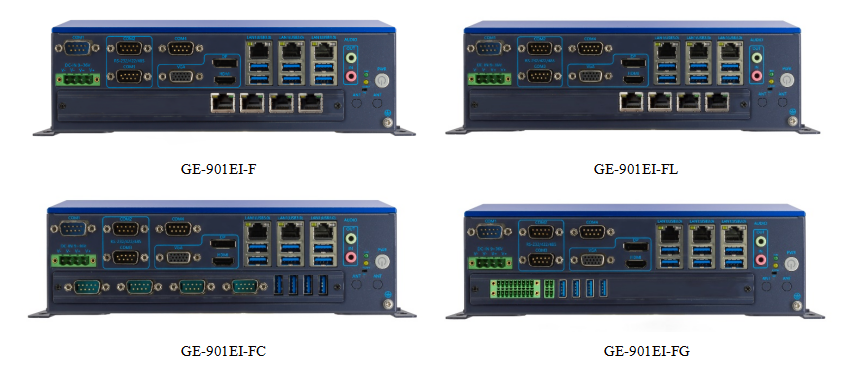
◆Industrial-grade Intel? Q170 SoC, compatible with Intel? Xeon?/Core? desktop processors (6th/7th/8th/9th Gen)
◆Fanless design, support -20℃~60℃ working temperature
◆2*DDR4 SO-DIMM, up to 32GB, dual channel support
◆VGA, HDMI and DP interface, up to 4K 60Hz resolution
◆1*M.2 B-Key supports 4G/3G, 1*M.2 E-Key supports WIFI
◆1*M.2 M-Key storage interface, support SATA3.0/NVMe protocol
◆1*2.5-inch hard drive extraction box, built-in a 2.5-inch hard drive, support SATA3.0 ◆1*16-bit GPIO, 1*remote switch (daughter board)
◆3*intel high-performance Gigabit Ethernet ports, support up to 9 Ethernet ports (daughter board)
◆4*COM(COM2/3 RS-232/422/485), support up to 8COM(daughter board)
◆Wide voltage power supply DC 9-48V, with short circuit, over voltage and over current protection